Why Physics Games Are the Most Addictive Genre on the Internet

There is a moment in every physics game that hooks you permanently. It is not a moment you can plan for, because it emerges from the chaotic intersection of gravity, momentum, and collision detection in ways that no game designer could have scripted.
Maybe it happens when you launch a ragdoll out of a cannon at just the right angle and it ricochets off a trampoline, clips the edge of a spinning fan blade, pinwheels through the air, and somehow — against all probability — lands perfectly upright on a distant platform. You did not plan that. The physics engine did not plan that. It just happened, and it was the funniest, most satisfying two seconds of your gaming day.
This is the magic of physics games. They create a space where deterministic rules produce emergent, unpredictable outcomes. Gravity always pulls down. Heavy objects always hit harder. Elastic surfaces always bounce. But when you combine dozens of these simple rules into a complex environment, the results are endlessly surprising.
On TapRoad-Game.com, our Physics-tagged games consistently rank among our most played and most replayed titles. In this deep dive, we explore the science behind why physics games are so fundamentally addictive, review the best physics games available in your browser, and explain what makes each one unique.
The Psychology of Physics Games: Why Your Brain Cannot Stop
The Predictability Paradox
Human cognition craves two things simultaneously: patterns and surprises. We want to understand how systems work (patterns), but we also want those systems to occasionally defy our expectations (surprises). Physics games deliver both in perfect balance.
When you play Ragdoll Playground, you quickly learn the fundamental rules: heavy objects fall fast, light objects fly far, sharp things cause damage, bouncy things redirect momentum. These rules are consistent and learnable — they satisfy your pattern-seeking brain.

But because the game simulates dozens of objects interacting simultaneously, with tiny floating-point variations in initial conditions, the specific outcome of any given experiment is wildly unpredictable. Launch the same ragdoll from the same cannon at the same angle 100 times and you will get 100 different results. Each result is physically plausible (satisfying your pattern brain) but uniquely surprising (satisfying your novelty brain).
Psychologists call this the "predictability paradox" — the phenomenon where systems that are locally deterministic but globally chaotic produce maximum engagement. Slot machines exploit this same principle (each spin follows the same rules, but the outcome is unpredictable), but physics games do it without the ethical concerns of gambling.
The Slapstick Response
There is a specific type of humor that physics games exploit: slapstick comedy. Slapstick is the oldest form of comedy in human culture, predating written language. It relies on two elements:
- Physical expectation: We watch someone balancing on a ledge (we expect them to be fine)
- Physical violation: They slip, fall, and tumble in an exaggerated, physically driven manner
This pattern activates a neurological response that combines surprise (the failure), relief (we are not the ones falling), and recognition (we understand the physics that caused the fall). The result is laughter.
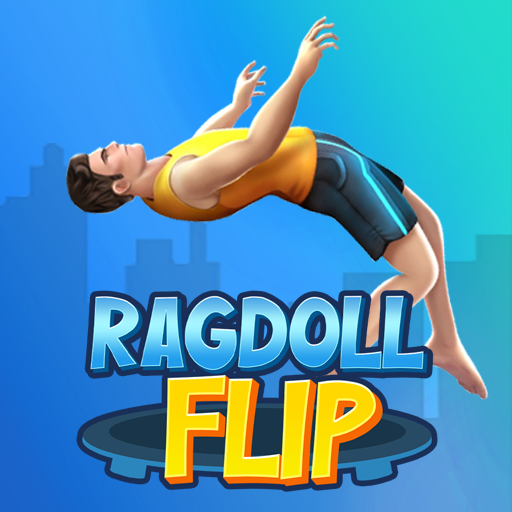
In Ragdoll Flip, every failed landing is a slapstick routine. You expect your ragdoll to execute a clean backflip and land gracefully on the platform. Instead, it clips the edge with one foot, rotates violently sideways, and ragdolls face-first into the abyss. The physics make the failure feel visceral and believable, which amplifies the comedic effect.
This is why physics games are so easy to share. Players record their funniest physics fails because the emergent nature of the physics engine makes each attempt feel different.
The Low Stakes Effect
Failure in competitive games triggers frustration. Losing a ranked match in a multiplayer shooter can genuinely ruin your mood. But failure in physics games triggers amusement. Why?
Because the consequences are non-existent. There is no ranking to lose, no team to let down, no progress to reset. When your ragdoll fails spectacularly, the "cost" of failure is literally zero — and the entertainment value of watching the fail is often higher than the entertainment value of succeeding.
This creates what psychologists call a "psychological safety net" — a context where experimentation carries no risk, which in turn encourages more creative and adventurous behavior. Players try riskier launches, more extreme angles, and more absurd object combinations specifically because failure is entertaining rather than punishing.
The 7 Best Physics Games You Can Play Right Now
With the psychology established, let us look at the specific games that best exemplify the genre.
1. Ragdoll Playground — The Definitive Physics Sandbox
Ragdoll Playground is the purest expression of physics gaming. There are no objectives, no scores, no win conditions. You are given a ragdoll, a toolkit of environmental hazards (trampolines, cannons, spinning blades, conveyor belts, explosives), and complete freedom to experiment.
What Makes It Special
The ragdoll itself is a marvel of procedural animation. It consists of 12 connected body segments (head, torso, upper arms, lower arms, upper legs, lower legs, hands, feet), each with realistic joint constraints. The head can rotate freely but cannot pass through the torso. The knees bend backward to a realistic extent. The arms flail in response to centrifugal force during spins.
This level of physical fidelity is what separates Ragdoll Playground from simple "throw the stick figure" games. Every interaction looks and feels physically plausible, which makes the emergent outcomes feel earned rather than random.
Creative Builds to Try
- The Pinball Machine: Arrange trampolines and bumpers in a vertical channel. Drop the ragdoll from the top and watch it bounce chaotically to the bottom.
- The Cannon Gauntlet: Line up multiple cannons in sequence. Each cannon launches the ragdoll toward the next, creating a chain of increasingly violent airborne transfers.
- The Blender: Place spinning blades in a enclosed space with the ragdoll. Results are not for the faint of heart.
2. Bike Xtreme — Where Physics Meets Skill
Bike Xtreme transforms physics from a toy into a challenge. You pilot a motorcycle through obstacle courses using realistic weight-balance mechanics. Lean your ride forward, backward, or perfectly neutral. The bike is not on rails — every frame, the physics engine calculates your center of gravity, wheel traction, suspension compression, and angular momentum.

The Weight-Shift Mechanic
The core skill in Bike Xtreme is weight shifting. During a jump:
- Leaning forward rotates the bike nose-down, which is useful for steep descents but fatal on flat landings
- Leaning backward rotates the bike nose-up, which creates a "wheelie" effect useful for climbing steep inclines
- Neutral balance maintains horizontal orientation, ideal for flat landings after moderate jumps
Mastering the transition between these three states — while airborne, at speed, with obstacles approaching — is what transforms Bike Xtreme from a casual experience into a skill-based mastery game.
The Trick System
Advanced players can execute mid-air tricks (backflips, front flips, no-handers) for score multipliers. The risk-reward calculation is intense: a successful backflip doubles your section score, but a failed backflip means a full level restart. The physics make every trick feel weighty and consequential — there is no "animation lock" that guarantees a clean rotation. You have to manage your angular momentum manually.
3. Ragdoll Flip — Acrobatic Precision
Ragdoll Flip distills the ragdoll experience into a scored challenge. Launch a ragdoll off a springboard, execute mid-air rotations, and attempt to land cleanly on a target platform. The scoring system rewards:
- Rotation count: More full-body rotations = higher score
- Landing accuracy: Closer to the center of the target = bonus points
- Landing orientation: Upright landings score higher than face-plants
- Style points: Clean, symmetrical rotations without wobble
The beauty of Ragdoll Flip is the tension between rotation speed (which increases score) and landing control (which requires slowing your rotation before impact). Greedy players who spin too fast cannot stop in time and crash. Conservative players who spin slowly get lower scores. The sweet spot is a narrow band of angular velocity that maximizes rotations while still allowing a controlled deceleration before impact.
4. Bucket Smash — Destruction Physics at Their Finest
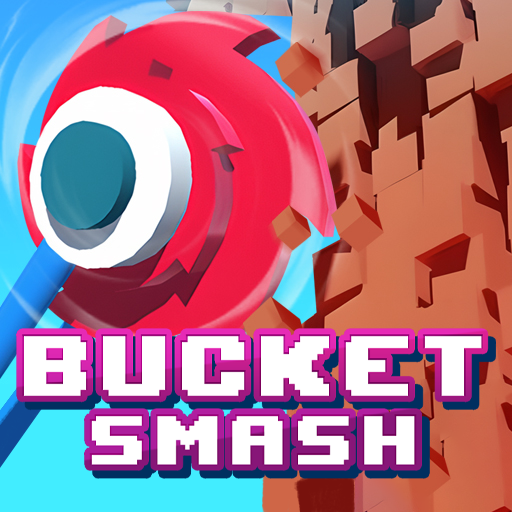
Bucket Smash channels the primal satisfaction of pushing over a tall stack of blocks. Elaborate structures of buckets, cans, boxes, and other stackable objects are arranged in increasingly complex configurations. Your job: throw balls at them until every last piece falls.
Why Destruction Physics Are Satisfying
There is a well-documented psychological phenomenon called "cathartic destruction" — the stress-relieving effect of watching carefully arranged structures collapse into chaos. It is the same reason people enjoy watching demolition compilations or popping bubble wrap.
Bucket Smash amplifies this effect with high-quality collision audio. Every impact produces a satisfying "clang," "crash," or "bonk" that varies based on the material and velocity of the collision. This audio-visual synchronization creates compelling sensory feedback that keeps you clicking "next level."
Strategic Depth
Despite the simple premise, Bucket Smash has genuine strategic depth:
- Base shots: Destroy the bottom layer to trigger a gravity-powered cascading collapse
- Precision shots: Target a single structural element that holds the entire tower together
- Multi-ball combos: Some levels give you multiple ball types (heavy bowling balls for impact, rubber balls for bouncing chain reactions)
- Angle exploitation: Ricocheting a ball off a wall to hit the back of a structure is often more effective than a direct frontal assault
5. Ragdoll Launcher — Projectile Physics
Ragdoll Launcher turns your ragdoll into a human cannonball. The objective is straightforward: launch the ragdoll from a catapult and maximize distance. But the physics governing the launch create a surprisingly deep optimization problem.
Variables you control:
- Launch angle (0-90 degrees)
- Launch power (adjustable charge bar)
- Mid-air posture (tuck vs. spread)
A tucked ragdoll reduces air resistance and rotates faster, useful for maintaining momentum. A spread ragdoll increases drag but creates more surface area for bouncing off environmental objects. The optimal strategy often involves launching at a specific angle, tucking during the ascent, and spreading before impact to maximize bounce distance.
6. Flip Rush — Gymnastic Chaos
Flip Rush combines ragdoll physics with parkour-style level design. You navigate through obstacle courses using a combination of running, jumping, and ragdoll flopping. The character's limbs are fully physics-driven, meaning every jump, landing, and collision produces unique ragdoll animations.
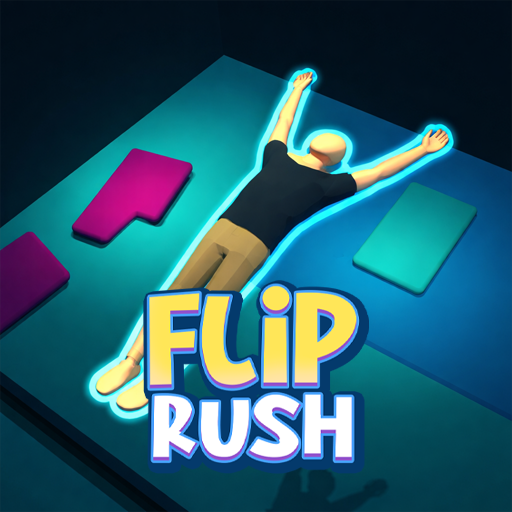
The level design forces you to switch between "controlled" movement (running and jumping with precision) and "uncontrolled" movement (letting the ragdoll physics take over during tumbles and falls). The best players develop an intuition for when to fight the physics and when to surrender to them.
7. Lift Off — Vertical Physics Challenge
Lift Off tasks you with launching a projectile skyward and maximizing altitude. The physics model includes wind resistance, terminal velocity, and rotational drag. You must balance initial launch power against aerodynamic efficiency to achieve the highest possible apex.

The upgrade system allows you to invest earnings in improved aerodynamics, stronger launch mechanisms, and booster rockets that activate at specific altitudes.
The Technology Behind Browser Physics Games
How do browser games achieve such realistic physics simulation without native software? The answer lies in three technologies:
HTML5 Canvas
The Canvas API provides a 2D drawing surface that games use to render physics-driven objects in the browser. Modern browsers can use hardware acceleration to make these scenes feel responsive on many devices.
Box2D / Matter.js
Most browser physics games use JavaScript ports of the Box2D physics engine (originally written in C++ for desktop game development). These engines calculate:
- Rigid body dynamics (position, velocity, rotation)
- Collision detection (when objects touch)
- Collision response (how objects react after touching)
- Joint constraints (how connected body parts move relative to each other)
The JavaScript ports are efficient enough for many browser-friendly physics games, especially when the scene is designed around the limits of mobile and desktop browsers.
WebGL
For 3D physics games (like Slope Rider 3D), WebGL provides hardware-accelerated 3D rendering directly in the browser. This allows complex 3D environments with dynamic lighting, shadow mapping, and texture mapping without any plugins.
Why Physics Games Will Only Get Better
The trajectory of web technology points toward even more impressive browser physics games in the near future:
- WebGPU: The successor to WebGL, offering significantly better GPU utilization for more complex physics simulations
- WebAssembly: Allows physics engines written in C++ to run at near-native speeds in the browser
- Multi-threaded workers: Web Workers allow physics calculations to run on background threads, freeing the main thread for rendering
We are already seeing browser games that rival the physics quality of standalone desktop titles from a few years ago. Within two to three years, the distinction between "browser game" and "real game" will be entirely meaningless.
Start Playing
Every physics game mentioned in this article is available right now at TapRoad-Game.com. No downloads. No accounts. No plugins. Just open your browser and click.
Our personal recommendation for first-time physics game players: start with Ragdoll Playground for pure sandbox experimentation, then graduate to Bike Xtreme when you want a structured challenge.
Browse our full games library for 30+ additional titles, and check out our other guides:
- Games Like Slope — 7 best alternatives for rolling ball fans
- Escape Road Tips — Expert guide to surviving police chases
- Free Browser Games 2026 — The 15 best games ranked
The physics engine is running. The ragdoll is waiting. What chaos will you create?