Ragdoll Games: Why We Cannot Stop Laughing at Floppy Physics
There is something deeply, universally, almost primal about watching a ragdoll body tumble down a flight of stairs, limbs flailing in every direction, and landing in a crumpled heap at the bottom. It should not be funny. A real person falling is concerning, even frightening. But a ragdoll? A ragdoll falling is comedy gold, every single time, and the internet cannot get enough.
Ragdoll physics games have exploded in popularity over the past few years, and it is not hard to see why. They combine the sandbox creativity of building games with the schadenfreude of slapstick comedy, all powered by physics engines that produce genuinely unpredictable results. No two falls are identical. No two launches produce the same trajectory. Every interaction is a one-of-a-kind performance by a digital stunt double that feels no pain.
The Physics of Funny
What makes ragdoll physics inherently comedic? The answer lies in a concept called the incongruity theory of humor. Our brains find things funny when reality deviates from expectation in a non-threatening way. When you see a rigid game character walk into a wall and stop, nothing is funny — the behavior matches expectation. When a ragdoll character walks into a wall and its limbs splay outward while its torso folds in half, the exaggerated physical response violates your expectations of how a body should behave, triggering a humor response.
The critical element is "non-threatening." Ragdoll characters are clearly not real humans. Their exaggerated proportions, simplified features, and elastic joints signal to your brain that this is safe to laugh at. The same fall that would horrify you if witnessed in real life becomes hilarious when performed by a digital puppet with noodle limbs.
The Chaos Factor
The second ingredient in ragdoll comedy is unpredictability. When you launch a ragdoll out of a cannon in Ragdoll Playground, you genuinely do not know what will happen. Maybe it soars gracefully through the air and lands perfectly. More likely, it catches its foot on the cannon rim, spins sideways, bounces off a trampoline at an unexpected angle, and ends up draped over a fence like laundry. This unpredictability means that even the same action performed identically produces different results, which is why ragdoll games maintain replay value that scripted games cannot match.
The Best Ragdoll Games You Can Play Free
Ragdoll Playground — The Ultimate Sandbox
Ragdoll Playground is the purest expression of the ragdoll concept. There are no objectives, no scores, and no fail states. You simply spawn a fully articulated ragdoll into a sandbox environment filled with interactive contraptions — cannons, trampolines, explosive barrels, conveyor belts, and gravity fields — and experiment.
The creative possibilities are the entire point. What happens when you:
- Launch a ragdoll out of a triple-stacked cannon array into a field of trampolines?
- Place explosive barrels in a line with staggered fuse delays?
- Create a gravity field vortex that spins ragdolls endlessly?
The answer is different every single time, because the physics simulation calculates tiny variations in initial conditions that cascade into wildly different outcomes. This sensitivity to initial conditions — the same principle behind the famous "butterfly effect" — is what makes Ragdoll Playground endlessly entertaining.
Ragdoll Flip — Precision Meets Chaos
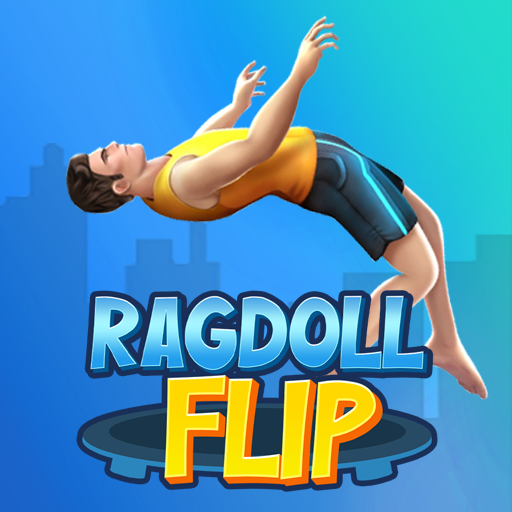
Ragdoll Flip takes the opposite approach. Instead of pure sandbox chaos, it gives you a specific goal: launch from a springboard, rotate in the air, and land on your feet on a target platform. The ragdoll physics introduce just enough chaos to make precision genuinely challenging.
The genius of Ragdoll Flip is the gap between intention and outcome. You charge your launch, release at the perfect moment, apply what you believe is the ideal rotation force, and then watch helplessly as your ragdoll's left arm swings wide, shifts the center of mass, and causes a spectacular face-plant two inches from the landing zone. The comedy is organic and player-generated, which makes it feel earned rather than scripted.
Ragdoll Launcher — Distance and Destruction
Ragdoll Launcher channels the satisfaction of distance-maximization into explosive physics comedy. You load a ragdoll into increasingly powerful launch devices — slingshots, cannons, rocket sleds — and aim for maximum distance or targeted landing zones.
The upgrade system adds genuine strategic depth. Between launches, you enhance launch power, add mid-air rockets, and unlock environmental bounce objects. The result is a progression loop where your ragdoll goes from flying 50 meters to clearing entire landscapes thanks to chain-reaction bounces off strategically placed trampolines and explosive barrels.
Why Ragdoll Games Are Perfect for Stress Relief
Psychologists have identified a phenomenon called cathartic release — the reduction of emotional tension through indirect expression. Ragdoll games provide this in abundance. Bad day at work? Launch a ragdoll into a wall of explosives. Stressed about an exam? Watch a floppy physicist tumble down an infinite staircase. The exaggerated, consequence-free destruction provides an outlet for frustration that is completely harmless and deeply satisfying.
The lack of stakes amplifies this effect. In competitive games, failure causes frustration. In ragdoll games, failure IS the entertainment. There is no wrong way to play. Every outcome — graceful, catastrophic, or absurdly unexpected — is equally valid and equally entertaining.
The Technical Side: How Ragdoll Physics Work
For the curious: ragdoll physics engines work by modeling a character as a series of rigid bodies (limbs, torso, head) connected by constrained joints. Each joint has limits on its range of motion, mimicking real skeletal joints. When external forces are applied — gravity, collisions, explosions — the physics engine calculates the resulting motion of each rigid body independently, subject to joint constraints.
The "floppy" feeling comes from the deliberate loosening of joint constraints beyond anatomically realistic limits. Real elbows bend 0-145 degrees. Ragdoll elbows might bend 0-270 degrees. Real spines have limited lateral flexibility. Ragdoll spines are essentially rubber. This exaggeration is what produces the hilarious limb-flailing that defines the genre.
Ready to Launch Some Ragdolls?
All three ragdoll games are available free in our games library:
- Ragdoll Playground — Pure sandbox experimentation
- Ragdoll Flip — Precision launching with chaotic landings
- Ragdoll Launcher — Distance maximization with upgrades
No downloads, no accounts, just instant floppy physics comedy. For more physics-based fun, check out our deep dive into why physics games are so addictive.